

 AUD (AUD)
 USD (USD)
 NZD (NZD)
 Canadian dollar (CAD)
 British pound (GBP)
What to Wear to Your First Ballet Class

Starting ballet is exciting. Whether you're enrolling your little one for the first time or stepping into class yourself, one of the first questions is always the same: what do I actually need to wear?
Start with a leotard
A leotard is the foundation of any ballet wardrobe. It lets your teacher see your posture and alignment clearly, which matters from day one. For children, a simple classic leotard in pink or any colour your school specifies is all you need to start.
At Dance Direct, we stock leotards from Bloch, Capezio, Energetiks, and Studio 7 Dancewear, in styles to suit toddlers right through to adults. If your school requires a uniform, we can help you find the right one.
Add ballet tights
Ballet tights complete the look and keep you warm as you warm up. Pink tights are standard for most children's ballet classes, but many younger dancers wear ballet socks through the warmer months. For pre-primary and primary levels, ballet socks are a popular and practical choice in summer. From level one onwards, tights are generally required all year round. Look for a style with a soft waistband and good stretch so nothing distracts you mid-plie.
Your ballet shoes matter most
This is the most important part of your kit. Ballet shoes give you the right grip and flexibility for the floor, and a well-fitted pair makes a real difference to how you move.
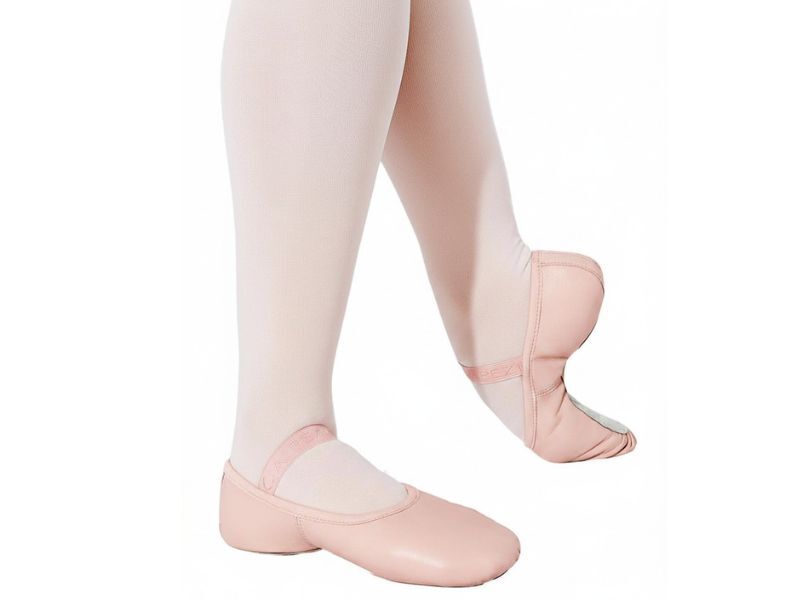
For beginners, the main choice is between full sole and split sole. Full sole shoes have a continuous sole running the length of the shoe, which suits younger children well as it helps build foot strength. Split sole shoes have a gap between the ball of the foot and the heel, giving more flexibility through the arch. Older children and teens tend to prefer them as they progress.
Both come in leather and canvas. Leather is durable and moulds to the foot over time. Canvas is lighter and tends to be a little more forgiving for wider feet.
Our own Dance Direct ballet shoes are a firm favourite for beginners, excellent quality at a price that makes sense when feet are still growing. We also stock Bloch, Capezio, and Energetiks for when your dancer is ready to move up.
Getting the fit right
Ballet shoes should fit snugly but not tightly. There should be no bunching of fabric at the toes, and the drawstring should sit flat around the ankle without digging in. A common mistake is buying too big to allow room to grow. In ballet shoes, extra room means extra fabric that gets in the way, can cause trips or slips, and makes it much harder to point your foot properly. Fit them to the foot they are wearing now.
If you are buying for a child, we always recommend coming in to our Maroubra store so we can fit them properly. A five-minute fitting makes a real difference, especially for younger children whose feet change quickly.
What to pack in your dance bag
Once you have your kit sorted, you need somewhere to put it. A good dance bag keeps everything together and makes the rush from school to class a lot easier. Look for one with a separate shoe compartment to keep your ballet shoes clean and dry, and enough room for a water bottle and a ballet wrap. A ballet wrap is great to have on hand for cooler days when your dancer needs an extra layer to warm up before class.
How to look after your ballet shoes and tights
Ballet shoes last longer with a little care. Let them air out after every class rather than sealing them straight into your bag. Canvas shoes can be hand washed when needed. Leather shoes should be wiped down with a damp cloth and left to dry naturally.
For tights, hand washing is the best way to keep them in good shape. If you do use the machine, use a laundry bag and a gentle cycle at a low temperature. Avoid the dryer either way as the heat breaks down the fabric and shortens their life.
A note on hair
Most ballet teachers will ask that hair is tied back, ideally in a bun. It keeps hair out of the face and away from the teacher during alignment checks. A simple bun with pins and a hair net is all you need.
What you don't need yet
Don't rush into pointe shoes, character shoes, or anything more specialised for a first class. Your teacher will let you know when the time is right. For now, keep it simple.
Frequently asked questions
Can my child wear leggings to ballet?
Most dance schools prefer a leotard and tights as the standard uniform. Some schools allow leggings for very young beginners but it is always best to check with your teacher first. A leotard and tights help your teacher see posture and movement clearly, which matters from day one.
Does my child need a specific colour leotard?
Many schools have a set uniform colour, often pink or a specific shade required by the syllabus. Check with your school before you buy. If there is no requirement, a simple pink or any classic colour is a safe starting point.
What is the difference between full sole and split sole ballet shoes?
A full sole shoe has a continuous sole running the length of the foot. It gives more support and is generally recommended for younger children whose feet are still developing. A split sole has two sections with a gap in the middle, giving more flexibility through the arch. It is popular with older children and teens.
How often should I replace ballet shoes?
It depends on how often your child dances and how fast their feet are growing. For children with regular classes, shoes may need replacing every six to twelve months. Check the fit regularly. If the toes are bunching or the drawstring no longer sits flat, it is time for a new pair.
Not sure what your school requires?
The best starting point is always to check with your dance school before you buy. Many schools have specific uniform requirements, especially for younger students. Once you know what's needed, we're here to help you find it.
Visit us in store at Maroubra or shop online at dancedirect.com.au. If you're not sure what to get, just ask. We've been helping dancers and their families get kitted out for over 20 years.
Dance Blog
Ballet Shoes vs Jazz Shoes: What Does My Child Need?
If you are a dance mum standing in a store trying to work out what shoes your child actually needs,...
What to Wear to Your First Ballet Class
Starting ballet is exciting. Whether you're enrolling your little one for the first time or stepping...
What to Wear to Gymnastics Besides a Leotard: Our Top Picks
The leotard is the foundation of gymnastics dress, but it is not the only option. Most gymnasts buil...
Which Dance Bag Does Your Dancer Actually Need to Carry?
A dance bag does a specific job. It carries shoes, costumes, accessories, and everything a dancer ne...
Dancewear: Why There Are So Many Dance Styles to Choose From
Different dance styles make different physical demands, and dancewear exists to meet them. The fabri...
Dance Shoes: What Are the Different Styles?
Dance shoes are not all made the same, and they are not meant to be. Each style is built for what th...