

 USD (USD)
 EUR (EUR)
 NZD (NZD)
 Canadian dollar (CAD)
 British pound (GBP)
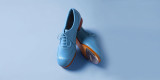
Dance Shoes: What Are the Different Styles?
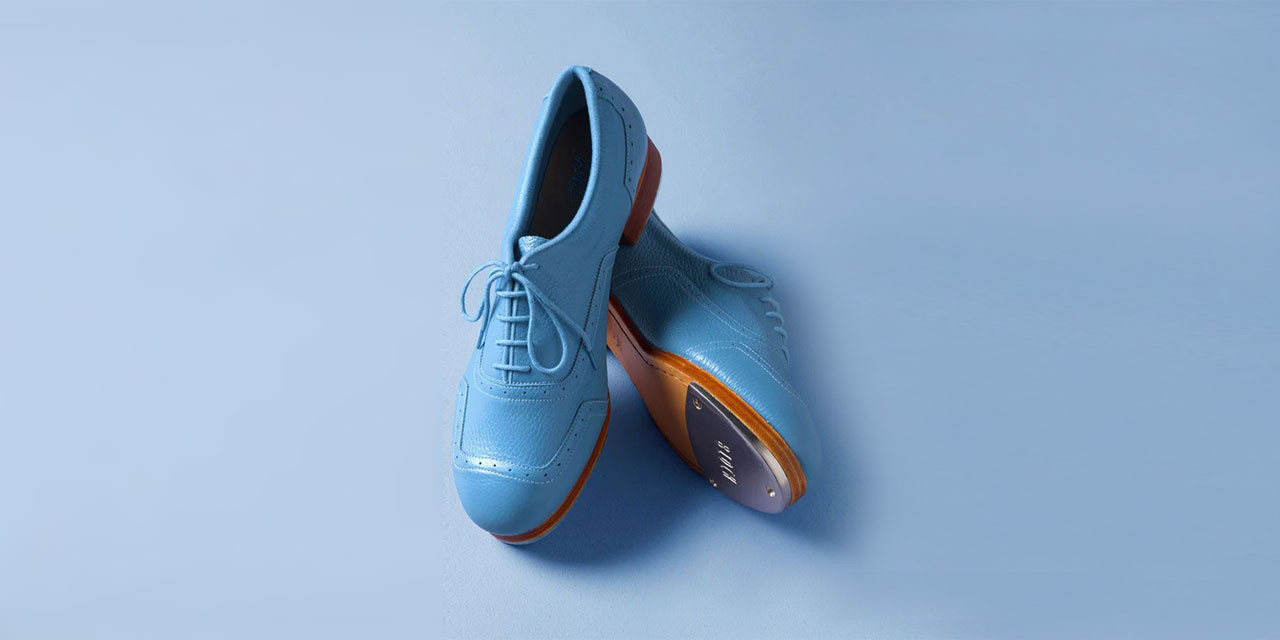
Dance shoes are not all made the same, and they are not meant to be. Each style is built for what that style of dance asks of your feet.
Ballet shoes
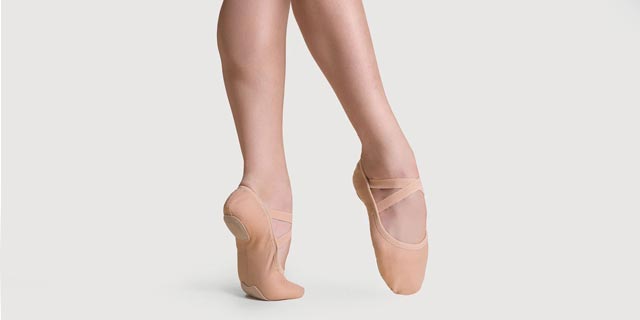
Ballet shoes come in two forms: soft shoes for class and training, and pointe shoes for advanced work. Most dancers start in soft shoes, either full-sole or split-sole, in leather, canvas, or satin. Leather holds up better for younger feet still developing strength. Canvas is the everyday workhorse for most students. Satin is reserved for performances where appearance matters more than longevity.
Split-sole construction gives more flexibility through the arch, which is why many teachers move students into split-sole shoes once their technique is strong enough to use that freedom properly. Full-sole shoes, by contrast, provide resistance that helps build foot strength in beginners.
Pointe shoes
Pointe shoes are the most technical fit in all of dance footwear. The box, shank, and vamp all need to match the individual shape of the dancer's foot, not just the length. A shoe that fits by size but not by shape will cause problems fast. That is why pointe shoe fitting should be done in person with an experienced fitter, and why buying pointe shoes online without that fitting advice is genuinely risky.
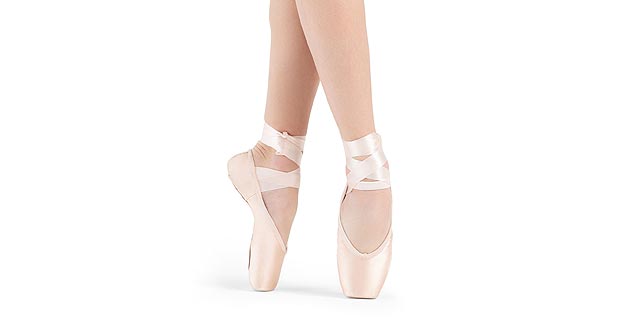
The box supports the toes when dancing en pointe. The shank gives arch support through the sole. The vamp covers the top of the foot and affects how much of the foot is visible, which matters for both aesthetics and function. Dancers transitioning to pointe for the first time often need a softer shank; more advanced dancers need a firmer one to match their strength and technique.
Jazz shoes
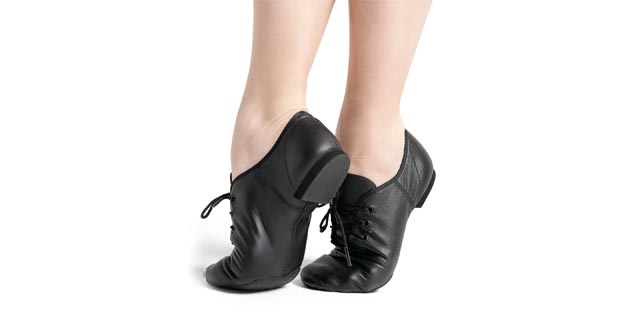
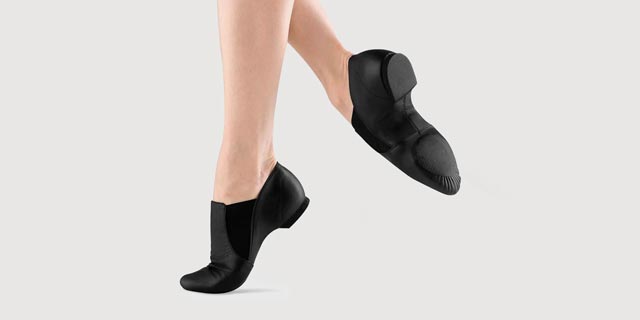
Jazz shoes have a split sole: separate sections under the heel and ball of the foot, with a flexible arch in between. That gap is what gives jazz dancers the range of motion they need to point and flex freely. A full-sole jazz shoe flattens that out.
The choice between lace-up and slip-on comes down to how much hold you need around the foot. Lace-up shoes let you fine-tune the fit, which matters for routines with sharp direction changes or footwork that demands precision. Slip-on shoes are faster to get on and off, and many dancers prefer them for class where the pace is quick and convenience counts.
Tap shoes
The sound a tap shoe makes is not just about the metal plates. It is about the whole construction: the weight, the stiffness of the sole, the heel height. A well-made tap shoe produces a clean, crisp sound at every tempo. A poorly made one sounds dull and muddy no matter how good the dancer is.
Flat tap shoes, with a low heel, are the right starting point for beginners and younger students. They are more stable and easier to control while building basic rhythm and footwork.
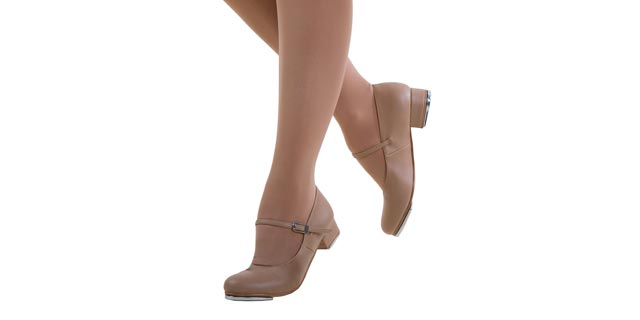
Heeled tap shoes, often called Cuban heels, sit at around one to two inches. They are for more advanced dancers who have the balance and control to work with that lift. The heel changes the dynamic of the sound and shifts weight differently through the foot, which affects how certain rhythms feel to execute.
Modern tap shoes have added features like split soles for more flexibility and adjustable taps that can be tightened or loosened to adjust the tone. Cushioned insoles help during long rehearsals. These refinements make a real difference for dancers working at a serious level.
Character shoes
Character shoes are used in RAD exams, character class, folk and cultural dance, and theatrical work where the shoe needs to look the part as well as perform. They come with a modest heel, typically between one and three inches, and are made to handle the footwork demands of these styles without sacrificing appearance.
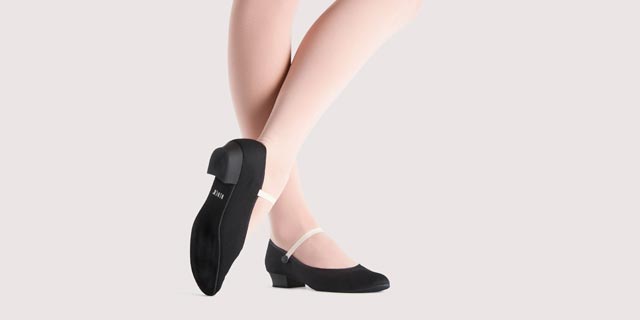
The heel height affects more than aesthetics. It changes posture, line, and the way weight travels through the foot in turns and steps. Most character shoe work uses a lower heel for class and syllabus, with higher options for stage. Leather uppers are the standard; they hold their shape and wear well under regular use. Most styles come in black, with some in tan or beige to suit different costume requirements.
Ballroom and social shoes
We also call these social shoes. The two main categories are Latin and standard ballroom, and they are built for different things.
Latin shoes have a higher heel, between one and three inches, and an open-toe design. The heel shifts the body's centre of gravity forward, which is exactly where it needs to be for the cha-cha, samba, and rumba. The open toe allows the foot to work freely through quick, intricate steps.
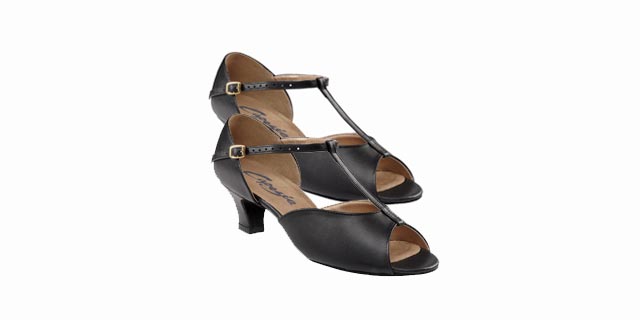
Standard ballroom shoes have a lower heel and are built for the smoother, more travelling dances: waltz, tango, foxtrot. The suede sole is not a stylistic choice. It allows the controlled slide and glide that these dances require. A leather or rubber sole would grip too hard and fight the movement.
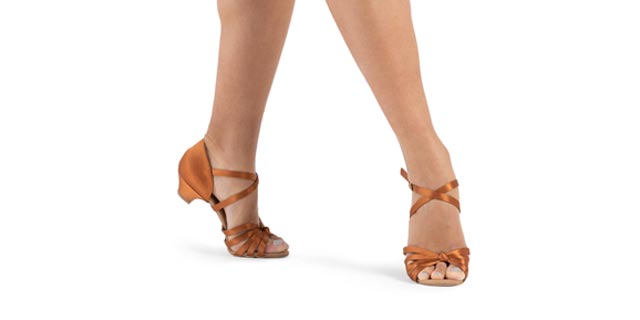
Contemporary and lyrical footwear
Contemporary and lyrical dancers mostly work barefoot or close to it. Foot undies and half-soles sit under the ball of the foot and over the toes, leaving the heel and arch exposed. They give just enough grip to stop slipping on a sprung floor without restricting how the foot moves.
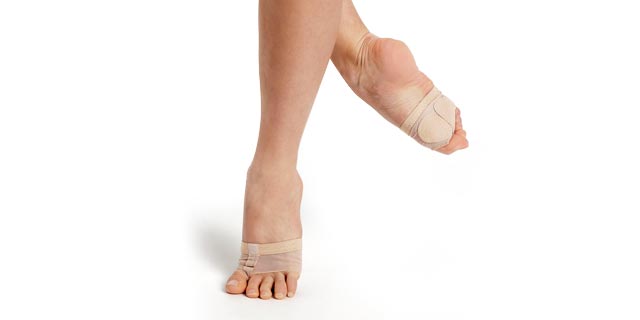
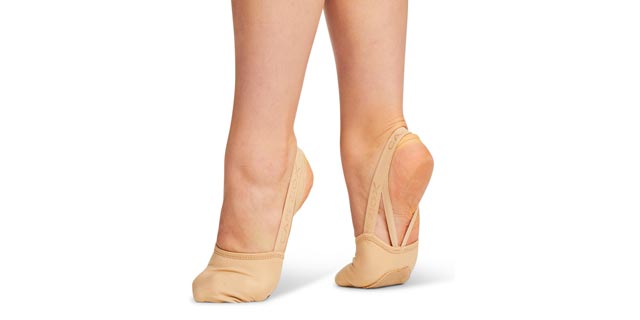
Half-soles, also called pirouette shoes or turning boards, cover a slightly larger surface and are popular with dancers who need a bit more support for turns and floor work. The key benefit over bare feet is protection: even a well-maintained studio floor will wear through skin during a long rehearsal or performance season.
Dance sneakers
Dance sneakers look like trainers but they are not built like them. The sole is split or has a pivot point under the ball of the foot, which means you can spin and turn without the grip fighting you the way a regular sports shoe would. They are built for hip-hop, street, and commercial styles where the shoe is part of the look as well as the performance.
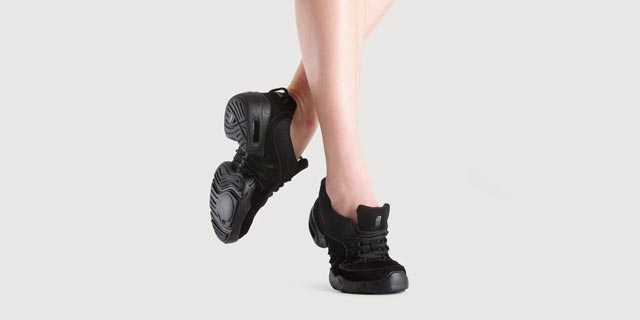
The padded insoles and cushioned heels handle the impact of a hard-floor studio session better than a standard jazz shoe. If your style involves a lot of ground-level work, jumping, or heavy footfall, a dance sneaker gives your feet more protection over a long session.
If you need advice on fit or which shoe suits a particular style, contact us or visit the store in Maroubra. Getting the fit right matters more than most dancers realise until something goes wrong.
Dance Blog
What to Wear to Your First Ballet Class
Starting ballet is exciting. Whether you're enrolling your little one for the first time or stepping...
What to Wear to Gymnastics Besides a Leotard: Our Top Picks
The leotard is the foundation of gymnastics dress, but it is not the only option. Most gymnasts buil...
Stylish and Functional Dance Bags for Every Dancer's Needs
A dance bag does a specific job. It carries shoes, costumes, accessories, and everything a dancer ne...
Dancewear: Why There Are So Many Dance Styles to Choose From
Different dance styles make different physical demands, and dancewear exists to meet them. The fabri...
Dance Shoes: What Are the Different Styles?
Dance shoes are not all made the same, and they are not meant to be. Each style is built for what th...